alice and thimble shelved themselves in alphabetical order

“I can hear people singing,” (and since I’m not allowed to listen to this playlist until after Thanksgiving) “it must be” Northern Hemisphere Midwinter Festival “Time.” Chrissie Hynde wrote this after The Pretenders’ first lead guitarist James Honeyman-Scott died of an overdose; as you’ll see, I like the sad carols. The ending of this song is sublimely 1980s; the band just repeats the chorus over and over until they end on a resounding chord. Jazz hands!
So much for being nondenominational: because I’m a lapsed Anglican nerd, I sometimes wonder whether Jonathan Coulton (suspicious initials, those) named his protagonists the Andersons because it means “Son of Man” and whether he chose Chiron because Chi-Rho was a Greek monogram for Christ. That said, the song works equally well as an anticapitalist anthem, with the robot overlords representing limited liability corporations. Oh, and it’s hilarious.
Mandatory, obvi. I usually start crying around “I could’ve been someone./ Well so could anyone.” Reminds me of when Rajit Singh returned our lost luggage and, years before that, when I met Shane MacGowan in Dublin, his broken teeth like tombstones on the red hills of his gums. I wish Kirsty MacColl were still alive.
This one makes me think of Jamey, who gave it to me, and of my mum, whose story it is. Tracey Thorn’s voice is a silver thread running through my marriage, from “Protection” as the anthem of our first year together to “Hatfield, 1980” for the summer we lived in Cambridge. Mum would have loved the lines: “We face down all the coming years/ And all that they destroy/ And in their face we throw our joy.” That was her basic rationale for all the mah jongg and Bailey’s.
Tracey’s Tinsel and Lights is such a great album that three tracks off it have landed on my playlist. This is a Joni Mitchell cover that earned its place for the lyrics: “I’m so hard to handle/ I’m selfish and I’m sad.” (No, YOU are.) I always think of Emma Thompson’s wonderful line from the mostly-reprehensible Love, Actually: “Joni Mitchell is the woman who taught your cold English wife how to feel.”
A Sufjan Stevens cover, but I heard Tracey’s version first so it’s definitive to me. I love the strangeness and sensuality of the lyrics – “I kissed your ankle” – and Sister Winter as darkness and heartbreak, but also as an intimate relation. I love the friends waiting patiently for the suffering heart to recover. Demeter and Persephone are here, and so is Jonathan Shay’s Odysseus in America with its call for the communalization of trauma.
Speaking of, that summer in Cambridge I wanted to hear the King’s College choir at last, but I was urged by a smiling Anglican to keep the girls behind the screen where we wouldn’t disturb the other congregants. Ah, the established church, ever eager to tuck its women and children away out of sight. Against that, though, set the pageant I attended at Holy Innocents in San Francisco, where the congregation discovered six-week-old Julia in her sling and urged me to take the role of Mary. I declined – I’m not that reconciled to my church damage – but I still have the tinsel crown Claire wore as a three-year-old angel. This strange old poem was given a mid-20thc setting by Elizabeth Poston. “It keeps my dying faith alive” – we’ll see, I guess.
Another silver thread through my life: My parents playing Steeleye Span when I was still too young to recognize the electric guitars and folk songs as incongruous with one another. Me carolling in York Street with the choir of Christchurch St Lawrence. Alex and I in Dublin discovering that we both loved this song. Maddy Pryor’s incredible voice was probably the prototype for my love for Kirsty Maccoll, Tracey Thorn and Vienna Teng. The ending of this song is ridiculously 1970s; the audio engineer just fades the choir out and you have to pretend that they’re walking away from you still singing.
This one makes me think of Salome, because sometimes we read each others’ minds. Talk about incongruity, the ukuleles and xylophones making it sound like a school play. Yet everything that makes the Northern Hemisphere Midwinter Festival important to me is here: the long dark, the beloved dead, the newborn baby, the terrifying angels and their incomprehensible message. The star and our journey.
The newest addition, which I heard for the first time live on Boxing Day last year at the Freight & Salvage, with Claire in my arms. I gave this one to Tina after we rode our bikes to the Forest of Wind Chimes at Wilbur Hot Springs and cried for Jen. “It’s the season of bowing our heads in the wind/ And knowing we are not alone in fear/ Not alone in the dark.” That’s all I got. Grace coming out of the void, for some reason. It’s so cold now but spring will come again. Not a metaphor: physics.
Yesterday I drove north, past a bonfire and through an almost Sydney-severe rainsquall, to where California State Route 16 West peels off from I-505 into Yolo County. There, the sun came out and shone on the dry Capay Hills, turning them lemon and gold in front of the smudged indigo mountains behind them.
I wanted so badly to go into those warm yellow hills! And then Highway 16 took me around a corner and into Rumsey Canyon, carved out of the stone by Cache Creek, all geology and cattle pasture and gnarled old oaks. I wanted so badly to get out and walk around! And then Google took me up a still narrower canyon through which Bear Creek was running and gently steaming, and I met Tina at Wilbur Hot Springs, a gorgeous place that smells in a very friendly way of eggy farts.
We soaked in the hot green sulfurous water, shared bread and cheese and salami and radishes and olives and champagne and a little chocolate, rode bikes through the nature preserve, past the geyser to the wind chime forest, and talked about books and politics and our children and our partners and the parties we used to throw in the 90s and her painting and my writing and her sister, my friend Jen. We were urged to leave our electronics behind, and I did, so I don’t have any pictures, sorry about that.
Tina and I don’t see each other often enough and this has to be changed. As I drove back, the near-full moon rose on my left through a pink band of sunset. It followed me home to the city.

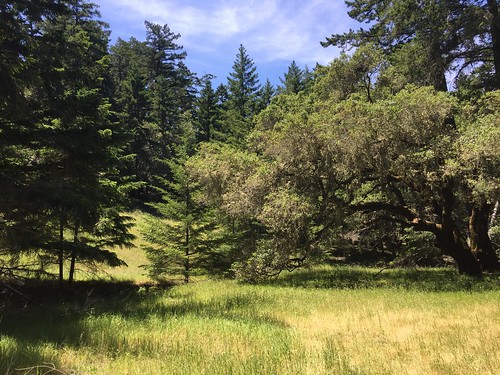
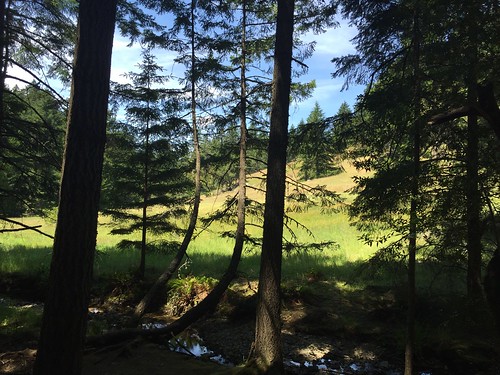
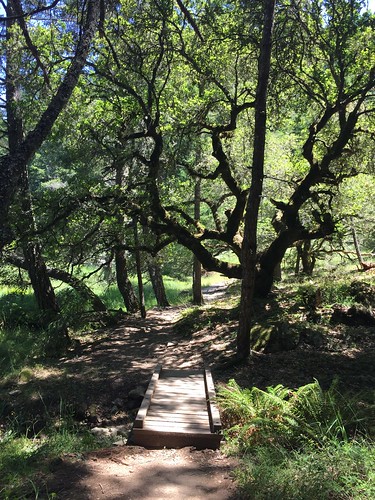
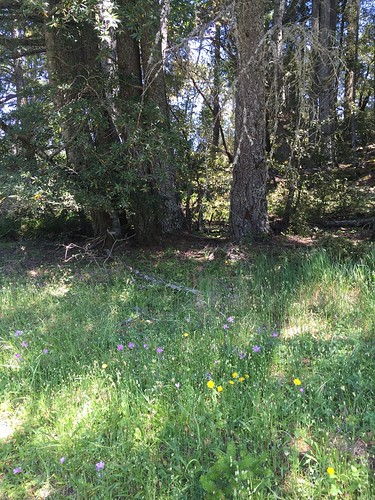
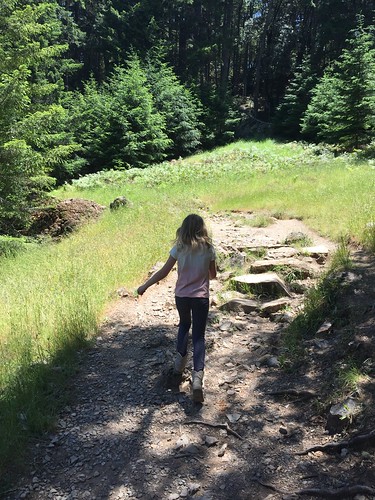
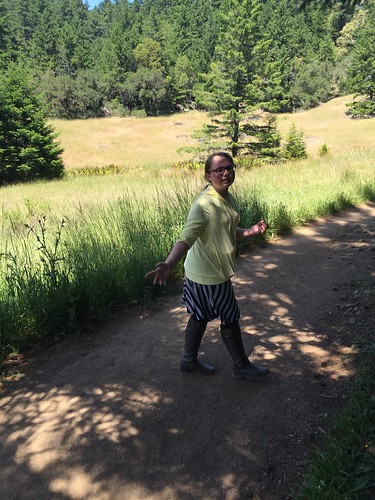
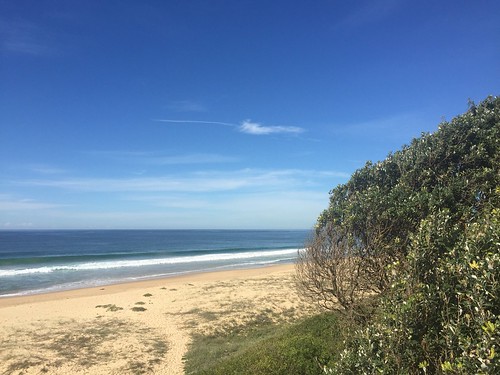
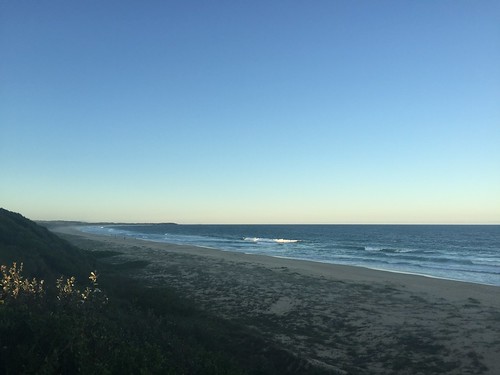
Today I drove south to a stable in the redwoods, where Salome and I saddled up and rode two bright gold pony mares through the forest to a chain of meadows in the sun. We talked about work and education and our children and her painting and my writing and our plans for the future. I stuck my iPhone in my jacket pocket, so here are some pictures for you.

We saw five mule deer, the sun pink through their absurd ears. One gentle doe was napping under the trees, curled like a cat.

California is so impossibly motherfucking beautiful sometimes, it actually kind of hurts.
1. With my dearest darling bad horse Boo Bear living out his retirement at a lovely farm upstate (no, really, he aten’t ded), I have a new horse, Sam. He is a liver chestnut so dark and shiny that he looks like he was cast in bronze or, possibly, treacle. He is scopey and athletic but also kind and forgiving, sensitive yet gentle as a lamb. He is an education. He makes me a better rider.
2. The worst of grief bogs you down in the past. As I feel myself starting to come out of it, I’ve been getting these little glimpses of a future I might like to live in, enough that I’ve been making a list: Aziz Ansari’s new comedy Master of None, Trevor Noah as host of The Daily Show and, of course, on endless repeat, Lin-Manuel Miranda’s Hamilton.
3. Many pixels have been spilled praising Hamilton showstoppers like “Satisfied” and “Wait For It”, because those songs are amazing. This week, though, I particularly love:
It is difficult to say anything about the massacres in Paris, except how sorry I am for those who have been hurt, and how desperately I wish for peace.
4. I tried to make pavlova for Mum’s birthday, a pretty Quixotic endeavor considering I’ve never yet succeeded at meringue. After two dismal failures to achieve glossy peaks, I stuck a sort of eggy soup in the oven, wept briefly and discovered online that our Bamix is almost certainly the problem. It doesn’t introduce enough air to allow the egg white to achieve the proper foaminess. So I ordered a hand mixer and just now, the egg soup came out of the oven as a delicately browned giant cookie, which we all look forward to eating.
5. “Brown liquor,” said Jeremy after he had mopped up my eggy tears. I poured us two glasses of the 12 year old Bunnahabhain and we clinked our glasses: “To Jean.” My mother gave me my love for animals and my righteous anger at the world’s injustices, and she was a much better pastrychef than I am. I miss her every day, but I am very, very glad that she was my mother.
…in the last twenty years I had grown accustomed to making my own decisions, without reference to anyone else. To having authority over my own life.
“We are weapons she made for her own use.”
“…You’re used to people being attached to you. Or being fond of you. Or depending on you. Not loving you, not really. So I think it doesn’t occur to you that it’s something that might actually happen.” “Oh,” I said.
“Oh, Cousin,” replied Sphene. “We sit here arguing, we can hardly agree on anything, and then you go straight to my heart like that. We must be family.”
“Can I be a cousin, too?” asked Station, from the wall console. “Of course you can, Station,” I said. “You always have been.”
After a hot spell that seemed to last at least a couple of years, San Francisco finally woke up in late autumn the other day. All the women wore their knee high boots and sweaters and scarves, and everyone looked relieved and cozy. I remembered a moment in ’99 or 2000 when, unlocking the front door of our apartment building on Alabama Street, I felt a breath of chill in the twilight and for the first time ever, got excited for Halloween and the Day of the Dead and Thanksgiving, for pumpkin pie and hot apple cider. For winter in America.
Smells, like music, short-circuit the rational mind. Today I stood over a tray of cheap romance novels outside a thrift store on Valencia and breathed their binding glue and ached to be with Mum. I walked under the Moreton Bay fig in the grounds of St Lukes, and trod on the figs crushed into the pavement just as I always did on the way to Rick’s house. In Rainbow Grocery, I caught the scent of a just-opened tin of Cadbury’s Roses, and what it meant: the family Christmas.
It was hard enough to write about Mum’s death, which seemed to reduce me to a mental age of 12. Dad’s death seems to have left me almost pre-verbal. My appetite is picky and fugitive and my sleep fitful and unsatisfying. I am at most 5. I dreamed I was a mad old cat lady in France, and that I ended up spending my days rambling through the vineyards with the twin sons of the coke-snorting couple in the party chateau next door.
“Most of my dreams are obvious, but that one wasn’t,” I said to Jeremy, who rolled his eyes.
The parents were asleep on the job, but I sat by the river while the wild-haired, speechless little boys played in the dark water, and I made sure they didn’t drown.
I spent the week in Vegas for work, which is always deeply strange, like going to a habitat on Mars. You fly in over red wasteland and craters and then everything is under one roof and you never go outside. Except for one walk along the lobby of the convention center after the keynote, I had no direct sunlight for four days. Not good. How can I photosynthesize under these conditions.
It was an indescribable relief to be home, basking in a sun-drenched San-Francisco-in-October day, even if the Blue Angels were roaring overhead, reminding us that our space for progressive pacifism is provisional and may be revoked at any time. Claire spent the same four days at a school camp and I met her at the bus. She was filthy and cheerful. She demanded that I play Hamilton in the car, and she wanted Peruvian for lunch: “Camp food was too bland.” Definitely my kid, then. We had empanadas and lomo saltado and chicken and sweet potato fries and mango lemonade. She told me the camp gossip and I caught her up on our mutual fandoms. Mallory Ortberg discovered Steven Universe, which makes us both very happy.
I missed her in a new way during this separation, not only as my kid but as someone who makes me laugh in her own right, who makes me think. Someone I would want to be friends with anyway.
The city has had a series of almost tastelessly lurid sunsets lately and tonight’s was ablaze.
“The sky is weird colours,” I told Jeremy.
“You’ve been in Vegas,” he said. “You haven’t seen the sky.”
“The sky is colours!”
“The sky!”
(I already used half these jokes on Twitter; sorry about that.)
Let’s say, for a moment, that the character of a city has an effect on its inhabitants, and that it sets the frequency on which it calls out to the migratory. People who are tuned a certain way will heed the call almost without knowing why. Thinking they’ve chosen this city, they’ll never know that the city chose them.
It’s a favorite myth in our culture that hardship makes you a better person, that it is merely the grindstone on which your essence is refined and polished. But the truth is that scarcity, depression, thwarted ambition, and suffering most often leave the person a little twisted.
We all occupy space on top of one atrocity or another, blood has coated every square inch of this earth.
My childhood was one of deprivation. Not deprivation in a material sense but a deprivation of beauty. Which might not sound like much, unless you live on beauty, unless it is your air and water and religion.
The south of France of today is what happens to a place when all the artists, the queers, and the misfits have been driven out by rising prices and improving “quality of life.” The rich are attracted to the places built by the freaks, the heat and the noise of places like Berlin, New York, San Francisco, and then they strip the cities down to their stumps like an insect swarm, driving off any biodiversity until all that is left is people with money.
You are not standing in the London of today but in the London of forever, its pasts and its futures, real and imagined.
What saves you is a new story to tell yourself about how things could be.
…organizations that think of themselves as highly meritocratic tend to have more gender bias than organizations that do not.
“Our struggle today is not to have a female Einstein get appointed as an assistant professor. It is for a woman schlemiel to get as quickly promoted as a male schlemiel.”
Over time, she learned that there were certain adaptations she just couldn’t make if she wanted to stay true to herself. “I needed to be the same person at work and outside of work,” she said. “It was too stressful to try to be two different people.”
Every object has a different role to play. Not all clothes have come to you to be worn threadbare. It is the same with people. Not every person you meet in life will become a close friend or lover. Some you will find hard to get along with or impossible to like. But these people, too, teach you the precious lesson of who you do like, so that you will appreciate those special people even more.
When you come across something that you cannot part with, think carefully about its true purpose in your life. You’ll be surprised at how many of the things you possess have already fulfilled their role. By acknowledging their contribution and letting them go with gratitude, you will be able to truly put the things you own, and your life, in order. In the end, all that will remain are the things that you really treasure.
1. There is a much longer story about the horse show that I will doubtless tell each of you over a bottle of wine some time, which begins with Nick-the-horse dumping me onto a fence at our Friday lesson, such that his bridle came off and I still have a spectacular bruise on my right butt cheek, moves through a 2-hour drive to get a delightful Dutch breeder named Constanza from the showgrounds to the airport (we are fast friends now and I am invited to her farm outside Utrecht), and ends with me enjoying myself in a show ring for the first time, riding the kind of blissed-out, fluid round we can do at home but never before in front of a judge. “Shit,” Casey reports the trainer standing next to her saying of our performance: “they are laying down some good trips.” We were.
2. Once again I have been puzzlingly overlooked for a Macarthur – perhaps something to do with the fact that I haven’t actually written anything – but I was completely goddamn delighted with two of this year’s picks: my longstanding beloved Ta-Nehisi Coates (have you read his new book yet, why haven’t you read his new book yet), and my new fling Lin-Manuel Miranda. I’ve listened to the cast soundtrack of Miranda’s musical Hamilton approximately one gajillion times since it was released last week. It’s a masterpiece. There’s fine-grained, scintillating brilliance in the detail work, a pattern not so much sequential as unfolding ever outwards, revisiting themes to add nuance and complexity and shadow. But there’s also the straight-up shot to the heart of a staggering story, fiercely told. God, just listen. Trust.
3. Three audiobooks by dudes, of varying quality but interconnecting themes: the Oliver Sacks memoir, and then Laszlo Bock’s book about people ops at Google, and then Vaillant’s account of the Harvard Grant Study. You always think you can’t love Oliver Sacks any more, and then you do. People are so real and present and urgent to him. I wanted to be scathing about Bock but his sincerity and curiosity were hard to resist. (Like Maciej Ceglowski and Sebastian Stan, he grew up a communist; maybe that’s why all three seem to have an inner core of diamond-hard idealism. Easy enough to sneer at freedom when you’ve never been unfree.) Bock’s description of evidence-based everything has the distinction of being the first thing I’ve ever read that gave me the slightest interest in working at Google. Still slight, though. Weirdly, Vaillant’s book has made me yell at the car stereo a lot more than Bock’s did. The Grant study is an extraordinary, 75-year-and-counting longitudinal study of a bunch of college men. With this astonishing wealth of material at his disposal, Vaillant’s mistakes are both egregious (autism, for example, is not a “genetic lack of empathy” and fuck you George for saying that it is) and pervasive. The case studies are quite glorious, almost worthy of Sacks, but the conclusions I draw from them are very different from Vaillant’s. A delicious takedown in the Atlantic paints him as a deeply flawed man.
4. Three books by ladies, of uniformly high excellence: Marie Kondo’s Tidying Up is just as life-changing as advertised. Sparking joy is good but the part that clicked for me is the act of thanking your no-longer-needed belongings for their service. My medicine cabinet has never looked so spare. I put off reading What Works for Women at Work for months, afraid that it would make me feel (more) guilty, but in fact it’s one of the most validating books I’ve read in ages. Jessa Crispin’s Dead Ladies Project documents a sojourn in Europe in search of reasons to live. I am devouring it.
5. How is it even possible that I haven’t blogged about Steven Universe yet? There’s probably a German word for the first time your kid recommends something to you and you pay attention to the thing and you realize, Holy shit, this thing is really good. My kid found a good thing. SU is, for me and Claire, that thing. It’s a love letter from maker Rebecca Sugar to her younger brother, and from both of them to the beach towns where they spent holidays growing up, and to the anime they adore, and it’s also a fully realized world with compassionately drawn, three-dimensional characters. It is beautiful and wise and sane and also hilarious and adorable. It’s a love letter to all of us, and so’s Ta-Nehisi’s book and Lin-Manuel’s show and Oliver’s memoir, and I needed all of them, I needed all the reasons I could possibly find to get out of bed, I literally needed reasons to get back on the horse, and they came when I needed them and I’m so grateful.
Cavort: applying to horses, probably from the colloquial intensifying prefix ca- + vault (“jump, leap”); later generalized. Early sources connect it to cavault, a term for a certain demeanor of horses.
Remember our last, catastrophic outing? I decided to pretend that I was some other, much more skillful rider.

This turned out to be one of my better ideas.

Yesterday should have been Dad’s eightieth birthday. Last year I called him to wish him a happy birthday and it became obvious over the course of the conversation that he had no idea who I was. I ended up sleeping for most of that long weekend. I don’t know why anniversaries like this are so painful, although I know it’s a common enough sorrow. This one comes only two weeks after another terrible one, the day of Mum’s diagnosis in August of 2013.
So I’ve been cranky as hell, and I booked us a trip for Alain’s last weekend without really thinking about it – a night in a hotel near the aquarium in Monterey and a kayak trip on Elkhorn Slough. We got to the aquarium right when it opened and had it almost to ourselves for the first couple of hours. I showed Alain the Open Sea tank and the kelp forest. “Science church,” I said.
The Pacific giant octopus was awake and clambering over the glass. I crouched down at eye level and we looked at each other, mind to alien mind. The children had to drag me away. The bat rays in the touch tank were active as well, jumping out of the water to make eye contact. I stroked their satiny skin.
What makes Monterey Bay so spectacular is a mile-deep undersea canyon that terminates in Moss Landing. Also in Moss Landing: Elkhorn Slough, the largest tract of tidal saltmarsh in California outside the San Francisco Bay. It’s what the bay must have been like in the Before Time (before Europeans, I mean; maybe we Westerners love post-apocalyptic fiction because we are the goddamn apocalypse.) The water dances with seals and otters and fish. The sky is so thick with birds that they look like a mist.
Elkhorn Slough also supports a thriving colony of humans bumbling around in brightly-colored kayaks, and yesterday we were among their bumber (I meant to say number, but who am I to turn down a serendipitous typo?) Our tour guide Jon gave us a good, thorough orientation. When we all said we’d like to see sea otters, he said presciently: “Our real problem’s going to be staying out of their way,” and gave us some tips on what to do if wildlife approached too closely, which I apparently promptly forgot.

We visited these harbor seals first and they worried me even as they made me laugh, swimming under and around our kayaks and popping their silky heads out of the water, the glassy meniscus splitting over their sweet faces like a caul. Then we paddled by a raft of sea otters – at least thirty, probably more, about 1% of the global population. Everywhere we paddled, otters followed. My face ached from smiling at them.
We went under the bridge into the wetlands and saw terns dropping out of the sky, then flying out of the water with bright pilchards in their beaks, gulping as they flew. Stately brown pelicans sailed like galleons.
Fighting the tide to get back to the beach, we paddled near a pair of younger otters that fought and played in the water, an aquatic Alice and Thimble, jumping and Loch-Ness-Monstering joyously. We tried to stay out of their way but as we turned for home, one of them popped up and looked me straight in the eye. It swam boldly over to my kayak, slipping through the water like a thought, and climbed aboard.
I froze. I couldn’t remember anything Jon had told us to do. I am so used to talking to domestic animals that I said, inanely: “No, otter, you can’t be here.” It appeared to find this remark hilarious. It had clever hands and eyes full of mischief and pale whiskers. Its fur was so dense!
I’ve never been so close to a wild creature. I loved it with every particle of my being. With infinite reluctance I turned my back and started paddling. I felt its steady weight slide off the back of my kayak. Then it swam over to Alain’s kayak and clambered on.
“Splash at it!” said Jon, and paddled over to splash at it, whereupon it slipped off and climbed onto Jon’s kayak! He splashed it again and it swam back to me.
“Oh no you don’t,” I said, not wanting to be in violation of Federal laws against interfering with protected wildlife, and splashed my paddle in its adorable face. It frowned at me crossly and swam away.
“That doesn’t happen very often,” said Jon. But not never.
And I thought my face had ached from grinning before.
As you know, Bob, California is a bona fide motherfucking paradise. I’ve seen coyotes hunting in Orinda and Woodside and bobcats trotting purposefully across the Marin Headlands. I’ve seen elephant seals and sea lions and dolphins and whales. I’ve seen more raccoons and squirrels and mule deer and jackrabbits and scrub jays and hummingbirds and herons and egrets and turkey vultures and red tailed hawks than I can easily remember. But I will never forget my otter.
I’ve driven past the big-ass formerly-coal-fired now-natural-gas-fired power station at Moss Landing dozens of times but until two weeks ago I had no idea what this place even was. A chance remark at Jamey’s barbecue prompted me to look it up and book the trip. The protected area is relatively new in the scheme of things, where by scheme of things I mean the huge marine sanctuary that stretches from the Golden Gate to Hearst Castle. The Nature Conservancy started buying up land around Elkhorn Slough in 1971, and donated it to a foundation in 2012.
In the future I hardly dare let myself hope for, all our power comes from cheap solar and the highway traffic is autonomous Tesla art cars. Our food is grown in clean room farms. The cities are dense and green like forest meadows and the Marine Reserves and Protected Areas join up with the National and State Parks into one vast patchwork quilt of wildlife habitat. I’m more grateful than I can say for all the conservationists and scientists and docents and donors working towards that future. I’m glad Daddy raised us all in science church, and I’m glad he was our Dad.
“A female may be poor or delicate or a spinster, but it does seem ill-advised of Miss Liddiard to combine all three.”
She would never trust her again—no! But one could nonetheless be very fond of someone in whom one had no confidence whatsoever.
I don’t know how it was for you growing up in the UK, but here nearly all of us have this huge sense of irrelevance. We’ll never change anything. The world will never know us. We grow up thinking hard work and a certain amount of ability are all we need — and then we eventually have to accept that they can only take us so far.
Everybody said Dad was a genius.
It took me a while to realize that just being on the move wasn’t enough; that I needed to reconsider everything.
What Gjoni was doing was both complicated and simple, old and new. He had managed to crowdsource domestic abuse.
…the Internet is experienced completely differently by people who are visibly identifiable as a marginalized race or gender. It’s a nastier, more exhausting Internet, one that gets even nastier and even more exhausting as intersections stack up. It’s something to keep in mind, particularly since media narratives of the “worst” kinds of harassment rarely feature people of color.
People will never stop being horrible on the Internet. There will never not be garbage. But in a functioning society, someone comes to collect the trash every week. If private platforms are to become communities, collectives, agoras, tiny new societies, they have to make a real effort to collect the garbage.
Re-entry has been tough, because apparently all I really want in life is sunshiney France, steak frites, gelato and endless hours with my kids to swim and read frivolous novels.
Now I am back to my mundane life of sunshiney Northern California, high-stakes venture finance and show-jumping.
Me: Heather wants to borrow Little Poppies so she can paint Big Poppies. Yay! Go Big Poppy!
Alain: Is that a sports thing?
Jeremy: Yeah, maybe baseball?
Alain: I know as much about baseball as you know about cricket.
Me: What, nothing?
Alain: We lost the Ashes!
Jeremy: That was careless! Where did you have them last?
Alain: Not me, the Australian team.
Me: Can they retrace their steps?
Alain: By the way, you have leprosy.
Me: Sunburn.
Jeremy: From when we went bike riding.
Me: I was pulling off these sheets of skin and offering them to Jeremy.
Alain: Ew!
Me: He said: “Thanks! I’ll make a – No, I won’t say it.” I said: “What? A tiny me? A tiny penis?” He said: “I don’t want to say.” I said: “I will love you no matter what!” He said: “A lampshade.” I said: “EW NO BAD NO UNSAY IT.”
Jeremy: So now it’s been said again.
Me: “YOU ARE BAD AND SHOULD FEEL BAD GET OUT.”
Alain, to Jeremy: You should have gone with the Mini-Me.
Jeremy: A tiny wife!
Me: Poor Little, Poor Little Rachel.
Jeremy: Like Keira Knightley. Remember what Patrick said about her?
Me: “She is so wee!” You could keep her in your pocket.
Alain: Lose her in your pocket lint.
Me: How careless! Can you retrace your steps?